What this can include
- Visible copper or plastic pipe leaks
- Failed braided flexible hoses
- Dripping compression joints and fittings
- Leaking radiator or isolation valves
- Minor supply-pipe repairs
- Under-sink leaks and damp fittings
Small jobs welcome. The examples above are not the limit. Send photos and a postcode if your issue is similar but not listed.
Different warning signs — and why they matter
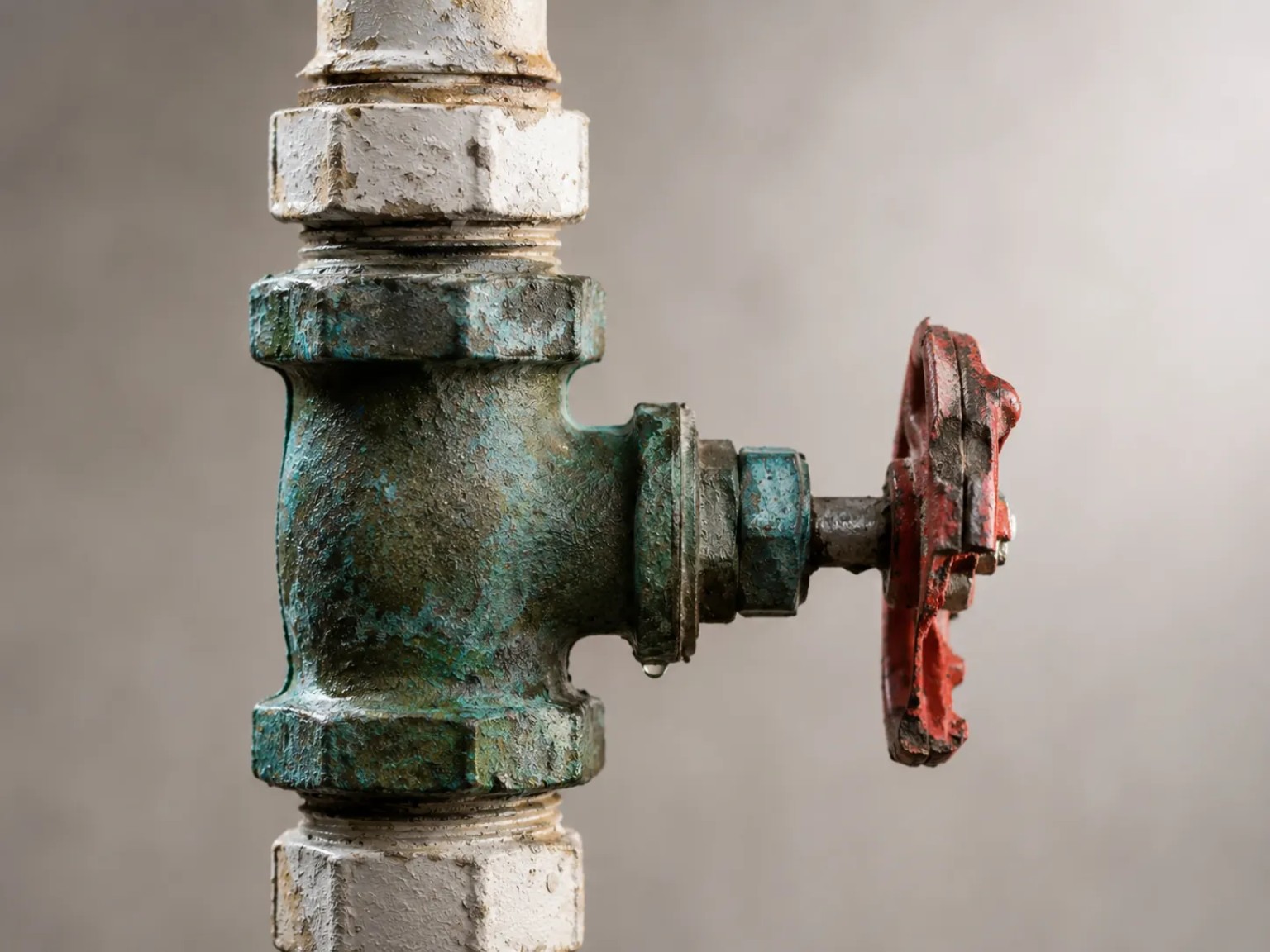
Most serious water damage does not begin with a dramatic burst. It often starts with one drop, a stained fitting, a twisted hose or a damp smell that is easy to ignore. These examples show four different faults, each with a different risk.
Image note: these photographs illustrate the type of fault or work described. They are not presented as a portfolio of completed GMP projects.
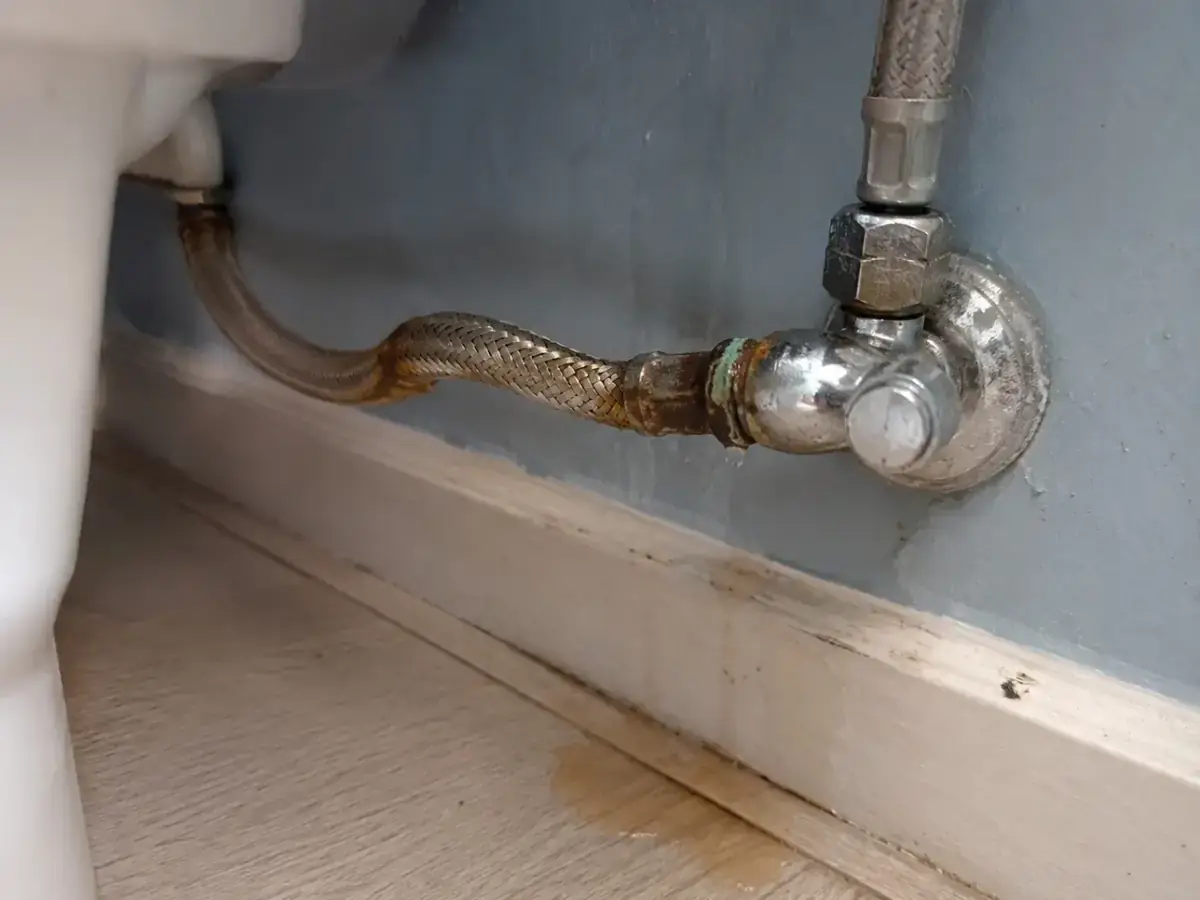
A hose under constant strain can weaken at the crimp or valve. Early signs include twisting, rust marks, green corrosion or occasional drops.
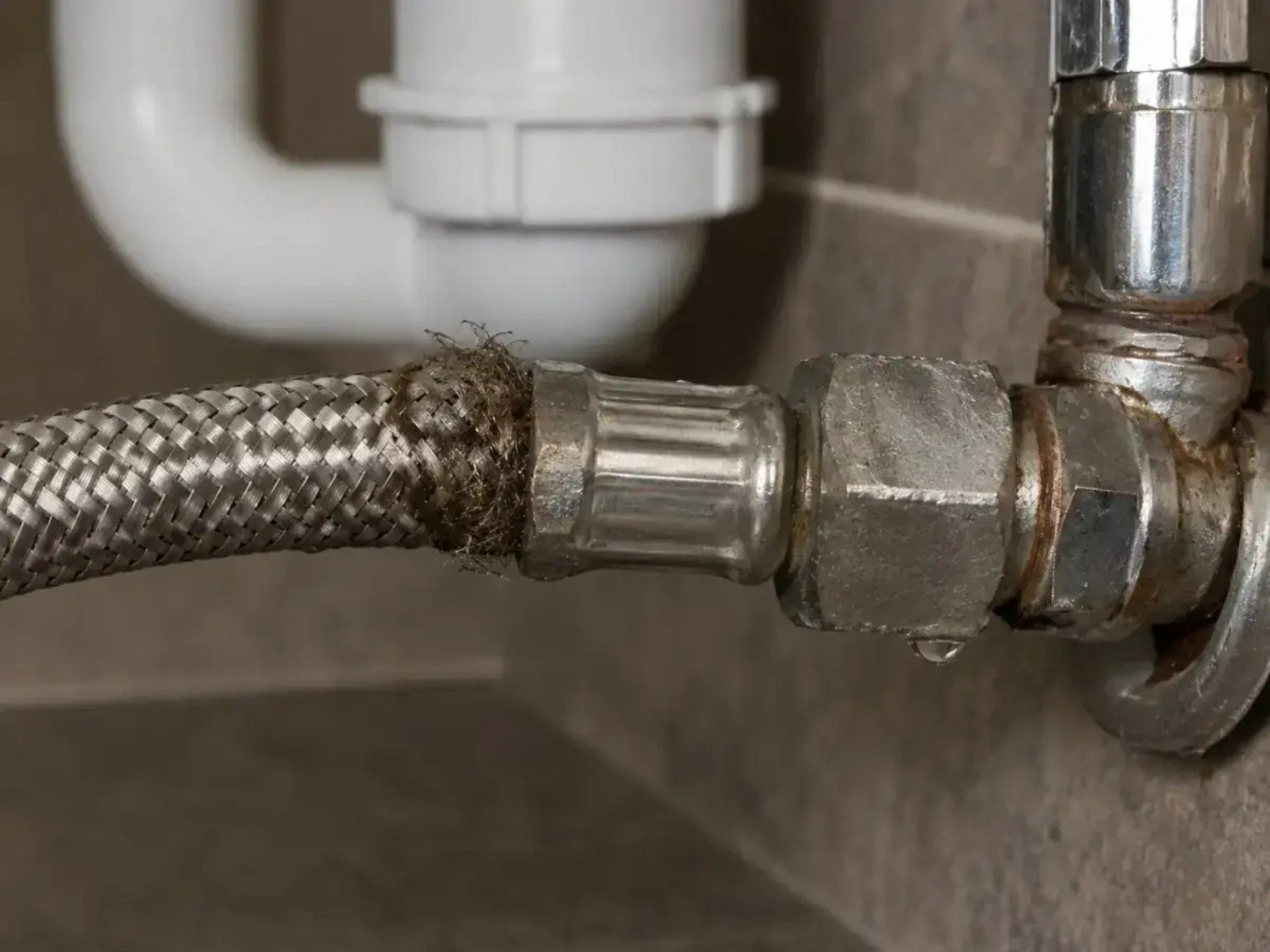
Once the outer braid separates, the inner hose has less protection. A small drip can become a sudden release of water without much warning.
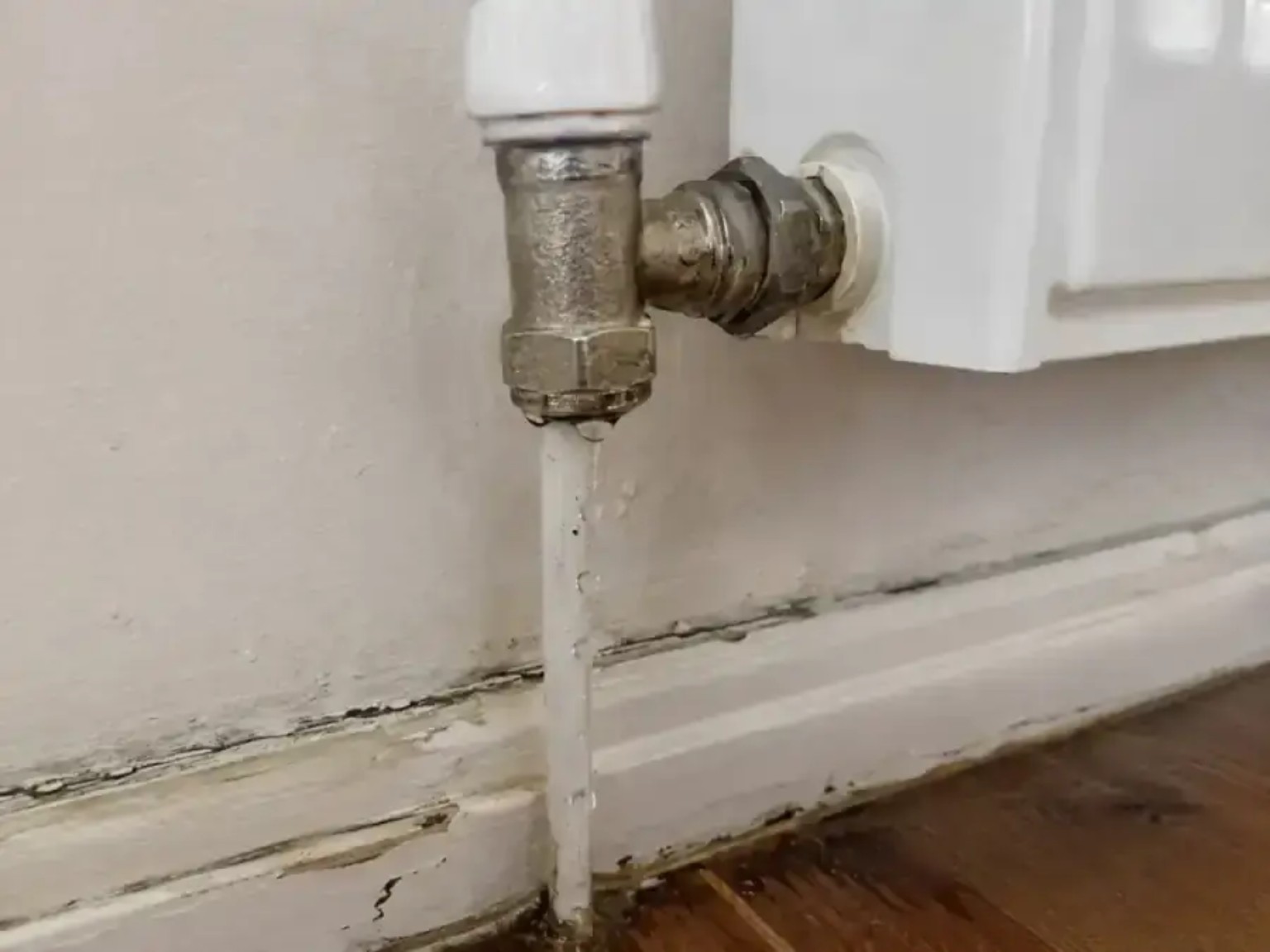
Water can soak skirting, flooring and plaster before the fault looks serious. Repeated topping-up may also indicate a heating-system leak.
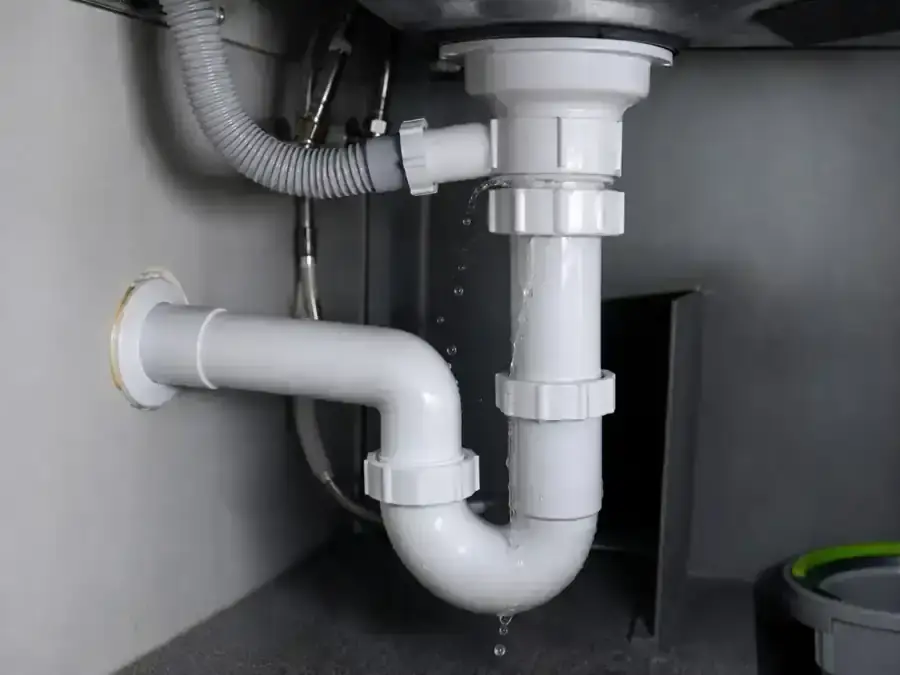
Hidden drips can swell cabinets, damage worktops and create a damp smell. By the time the base feels soft, the repair may be much larger.
Why waiting can cost more. Water follows gaps and can travel behind units, under flooring and into plaster. A simple hose, valve or seal replacement may be inexpensive at the start, but delayed action can add cabinet repairs, damaged flooring, mould treatment or redecorating.
Check these signs before they become damage
A hose that is twisted, kinked or stretched tightRust, green staining or white deposits around a fittingA damp smell inside a cupboardWater marks on skirting, flooring or ceilingsA valve that only leaks when touched or operatedPressure dropping repeatedly on the heating system
What to send on WhatsApp
Send your postcode, one wide photo showing the whole area, one close-up of the hose, valve or joint and—if water is moving—a short video. Mention whether the leak is constant, only appears when an appliance runs, or becomes worse when a valve is opened. If safe, also confirm whether the local isolation valve or main stop tap works.
Other domestic leaks we can assess
Dripping tap and toilet connectionsLeaking appliance hosesLoose or corroded compression jointsAccessible copper and plastic pipe leaksWaste trap and overflow leaksMinor radiator valve leaks